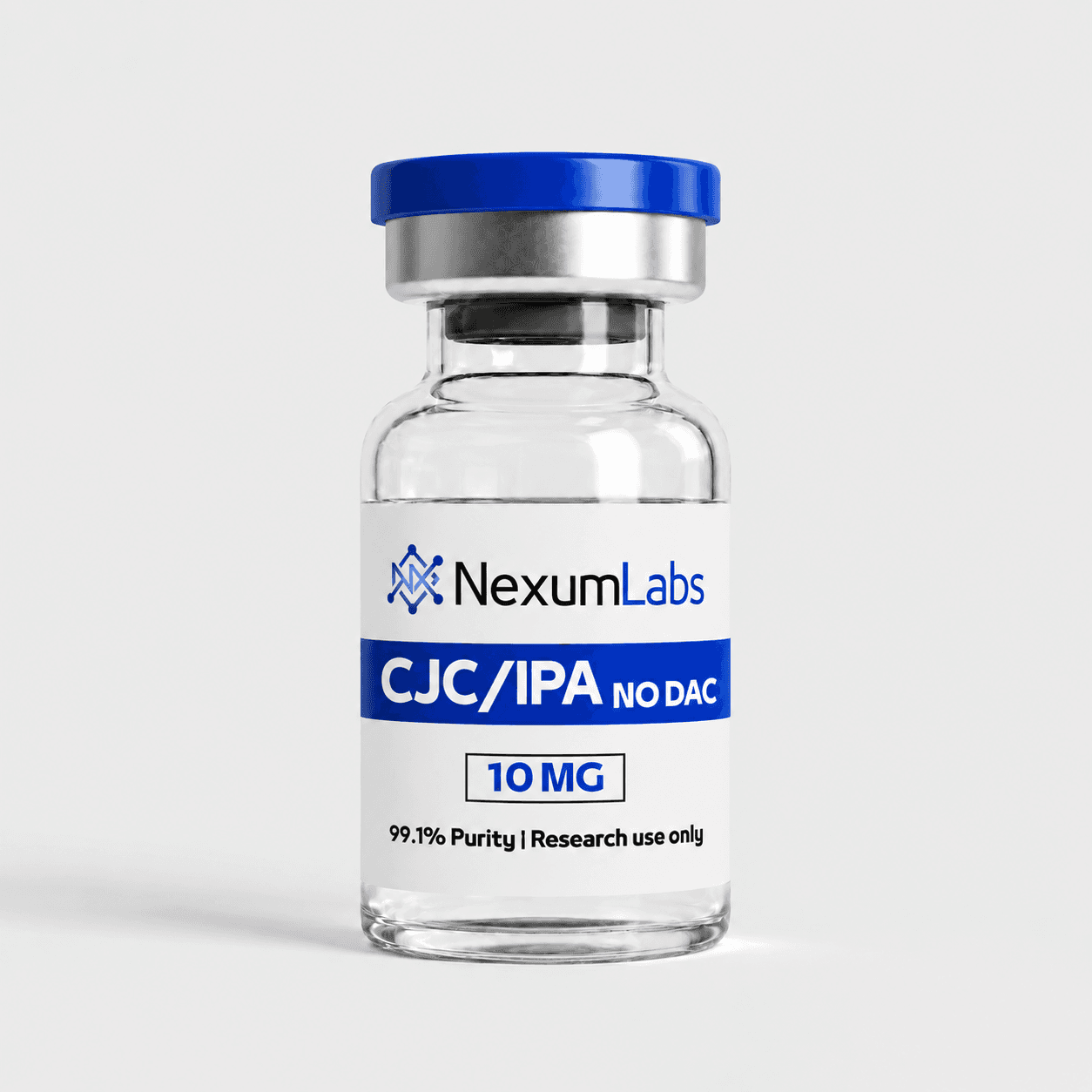
Description
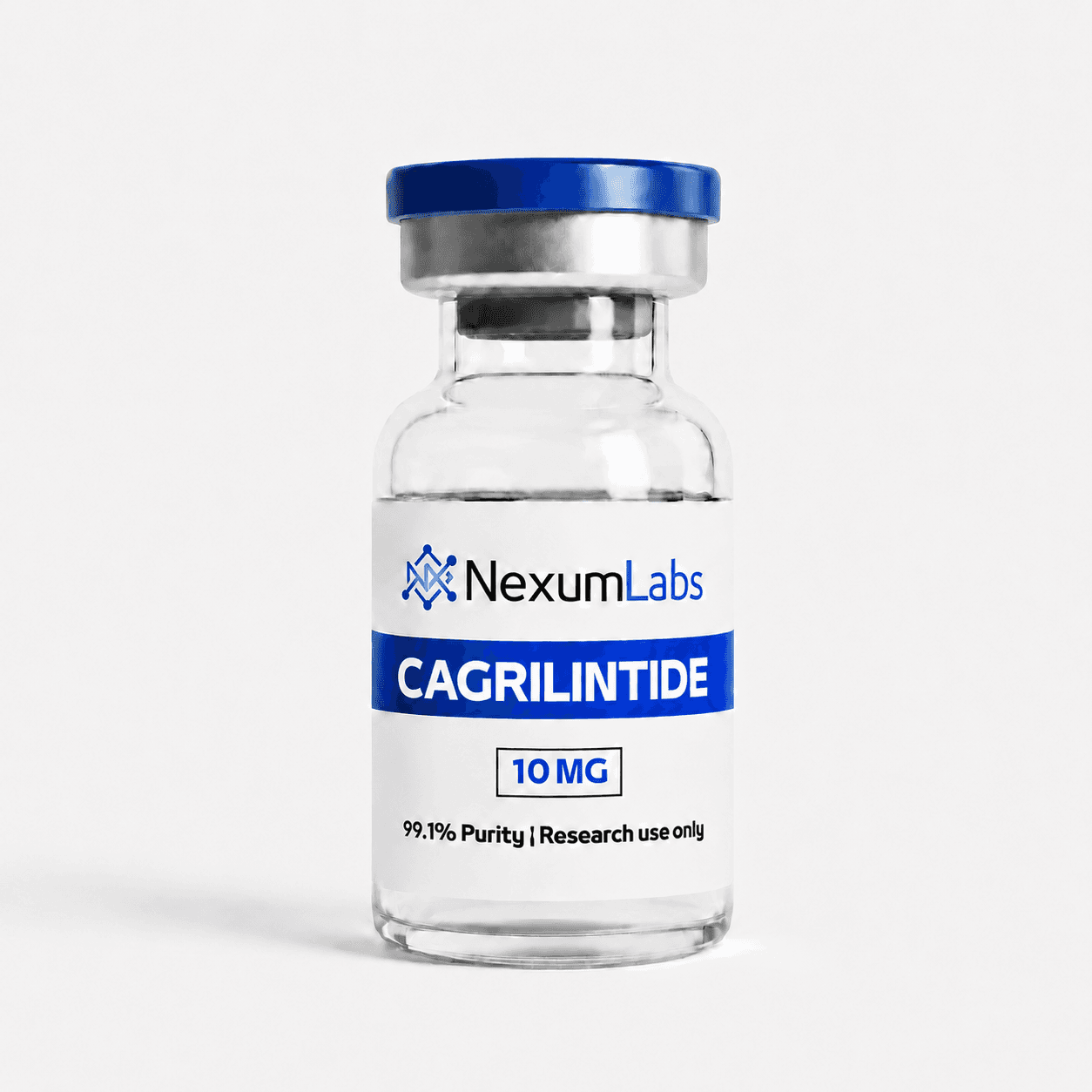
NexumLabs | Product information 01 — Description What is it? 01 / 03 Cagrilintide 10 mg Cagrilintide is presented in this data sheet as a compound intended exclusively for in vitro laboratory research. A research-grade amylin analogue for the study of satiety pathways and in vitro metabolism. i Important information: Compound intended exclusively for laboratory research. 02 — Certificate of Analysis Analytical data 02 / 03 Certificate of Analysis (COA) BATCH · NEXUMCAGRI004 Compound Cagrilintide · 10 mg Assay (HPLC) +99% Purity Identity (MS) Confirmed 03 — Research What has been studied 03 / 03 What it is Cagrilintide is an analogue of amylin, a pancreatic hormone, made stable and long-acting through lipidation; Kruse et al. described its development and the challenge posed by amylin’s tendency to form amyloid fibrils [1]. In the phase 1b study by Enebo et al., its half-life was 159 to 195 hours [2]. It is an investigational molecule and is not approved as a medicine. Phase 1b (2021). In 96 randomised participants, Enebo et al. assessed safety, tolerability and pharmacokinetics in combination with semaglutide; most adverse events were mild to moderate, and 37% of them were gastrointestinal [2]. Phase 2 (2021). In a 26-week dose-finding trial with 706 participants in the cagrilintide groups, Lau et al. reported mean reductions in body weight of 6.0% to 10.8%, versus 3.0% with placebo; gastrointestinal adverse events, mainly nausea, were more frequent than with placebo [3]. Type 2 diabetes, phase 2 (2023). In 92 participants, Frias et al. reported at 32 weeks, with cagrilintide alone, a change in HbA1c of −0.9 percentage points and in body weight of −8.1%; the combination with semaglutide showed larger changes [4]. Phase 3a, REDEFINE 1 (2025). In 3,417 participants followed for 68 weeks, Garvey et al. reported a mean change in body weight of −20.4% with the cagrilintide–semaglutide combination, versus −3.0% with placebo; gastrointestinal adverse events affected 79.6% of participants versus 39.9% [5]. References Kruse T, et al. Development of Cagrilintide, a Long-Acting Amylin Analogue. J Med Chem. 2021. doi:10.1021/acs.jmedchem.1c00565. PubMed 34288673 Enebo LB, et al. Safety, tolerability, pharmacokinetics, and pharmacodynamics of concomitant administration of multiple doses of cagrilintide with semaglutide 2·4 mg for weight management: a randomised, controlled, phase 1b trial. Lancet. 2021. doi:10.1016/S0140-6736(21)00845-X. PubMed 33894838 Lau DCW, et al. Once-weekly cagrilintide for weight management in people with overweight and obesity: a multicentre, randomised, double-blind, placebo-controlled and active-controlled, dose-finding phase 2 trial. Lancet. 2021. doi:10.1016/S0140-6736(21)01751-7. PubMed 34798060 Frias JP, et al. Efficacy and safety of co-administered once-weekly cagrilintide 2·4 mg with once-weekly semaglutide 2·4 mg in type 2 diabetes: a multicentre, randomised, double-blind, active-controlled, phase 2 trial. Lancet. 2023. doi:10.1016/S0140-6736(23)01163-7. PubMed 37364590 Garvey WT, et al. Coadministered Cagrilintide and Semaglutide in Adults with Overweight or Obesity. N Engl J Med. 2025. doi:10.1056/NEJMoa2502081. PubMed 40544433 Important: For laboratory research use only. Not for human or veterinary use.